Fast Charger Guide: Watts, Ports, GaN and PD Explained
Phone boxes often come without a charger now, and old chargers are slow. A good fast charger saves time every day — but the labels (W, PD, GaN, QC) can be confusing. Here is a simple explanation.
Watts (W)
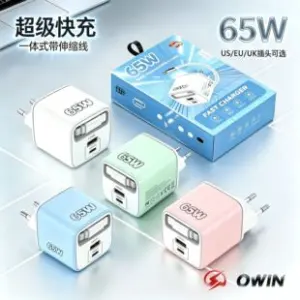
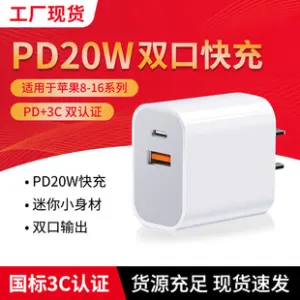
Watts show how much power a charger can deliver. A phone usually needs less than a laptop. A 20 W charger like Pd20W Dual Port Fast Charger for iPhone is common for phones; 65 W like Pd65W Retractable Charger Three-in-One can also charge many laptops that support USB-C charging.
PD and other fast-charging standards
USB Power Delivery (PD) is a widely used standard over USB-C. Your phone and the charger both need to support the same standard to charge at full speed; otherwise they fall back to a slower, safe speed.
GaN chargers
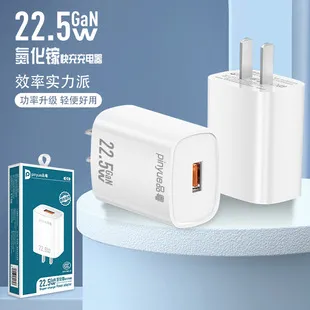
GaN (gallium nitride) is a material that lets chargers be smaller for the same power. Gallium Nitride Fast Charging Head is listed as a GaN charging head.
Multiple ports
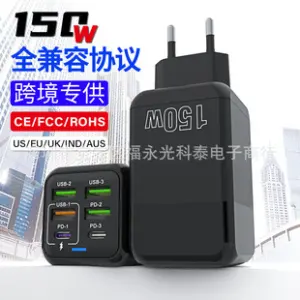
A multi-port charger such as 150W Multi-Port Fast Charger can charge several devices at once. The total power is usually shared between ports, so each device may get less when all are in use.
Choosing a fast charger
- Check what your device supports (in its manual or settings).
- Choose a charger with that standard and enough watts.
- Use a good cable rated for the power.
- Check the plug type for Bangladeshi sockets — we confirm this with the supplier.
Shipping note
Chargers without batteries usually ship by air. Products with built-in batteries can have restrictions — see air shipping from China. Browse mobile accessories and electronics.
Cables matter
A powerful charger with a weak cable will not charge fast. For high wattage, use a cable that is rated for it, keep it untangled and replace it if the plug becomes loose.
FAQ
Will a 65 W charger damage my phone?
Devices only draw the power they support, when the charger follows the standard. If unsure, ask the device maker.